Passport Renewal 2026: Wait Times, Tips & Speed Hacks That Actually Work
I nearly missed my cousin's wedding in Lisbon last spring because I believed the six-week processing time I'd read on some travel blog from 2023. When I finally checked the State Department site, routine renewal was sitting at eight weeks — and that was before the summer crush hit. The rules have shifted in 2026, and the gap between what you remember and what's actually happening right now can cost you a trip. So let's cut through the noise and talk about real wait times, the tricks that shaved nine days off my own renewal, and where the hidden potholes are that trip up even careful travelers.
Why Passport Renewal in 2026 Feels Different (and What That Means for You)
If you renewed your passport before the pandemic, you might remember a world where routine service took four to six weeks and expedited felt like a luxury, not a lifeline. That world is gone. In 2026, the State Department is processing a historic volume of applications, partly because the initial 10-year wave of post-9/11 passports came due for renewal, and partly because travel demand hasn't cooled. The result is a system that's functional but tighter — one where the official processing windows are honest, but the margin for error on your part is razor-thin.
What's changed isn't just the number of weeks. Online renewal, which launched as a pilot and is now fully operational for eligible adults, has quietly become the fastest lane for most people. But it's not available to everyone, and the eligibility rules are stricter than you'd guess. Meanwhile, the old advice about walking into a post office and hoping for the best is now actively dangerous if you have a fixed travel date. The single biggest shift I've seen is that processing times now fluctuate seasonally in ways they didn't before. February and September are relatively calm; May through July are a furnace. Planning around that pattern is one of the simplest speed hacks nobody talks about.
If you're wondering "how long does passport renewal take right now," the answer depends less on what the website says and more on whether you're submitting in March or June, whether your photo will pass the new automated checks, and whether you remember to sign your name in the right box. That's not to scare you — it's to arm you. Knowing the texture of the current system is what separates a smooth renewal from a panicked dash to a regional agency.
Real-World Passport Renewal Wait Times: What to Expect Right Now
Let's get specific. As of early 2026, the State Department's posted processing windows are: routine service: 6 to 8 weeks from the day your application arrives at the processing center, and expedited service: 2 to 3 weeks. Those are the official numbers, and they're updated regularly on travel.state.gov. But here's what those numbers actually mean when you're staring at a calendar and a flight confirmation.
Routine processing in the 6-to-8-week range doesn't count mailing time. If you send your application via regular first-class mail, add 4 to 6 business days each way — meaning your total door-to-door timeline is more like 8 to 10 weeks. I learned this the hard way when I mailed my renewal on a Tuesday in April and didn't see a status update for eleven days. Expedited service, by contrast, compresses both the processing window and the shipping if you opt for the 1-2 day return delivery. That's an extra $19.53 per envelope, and in my experience, it's the best $20 you'll spend in the entire process.
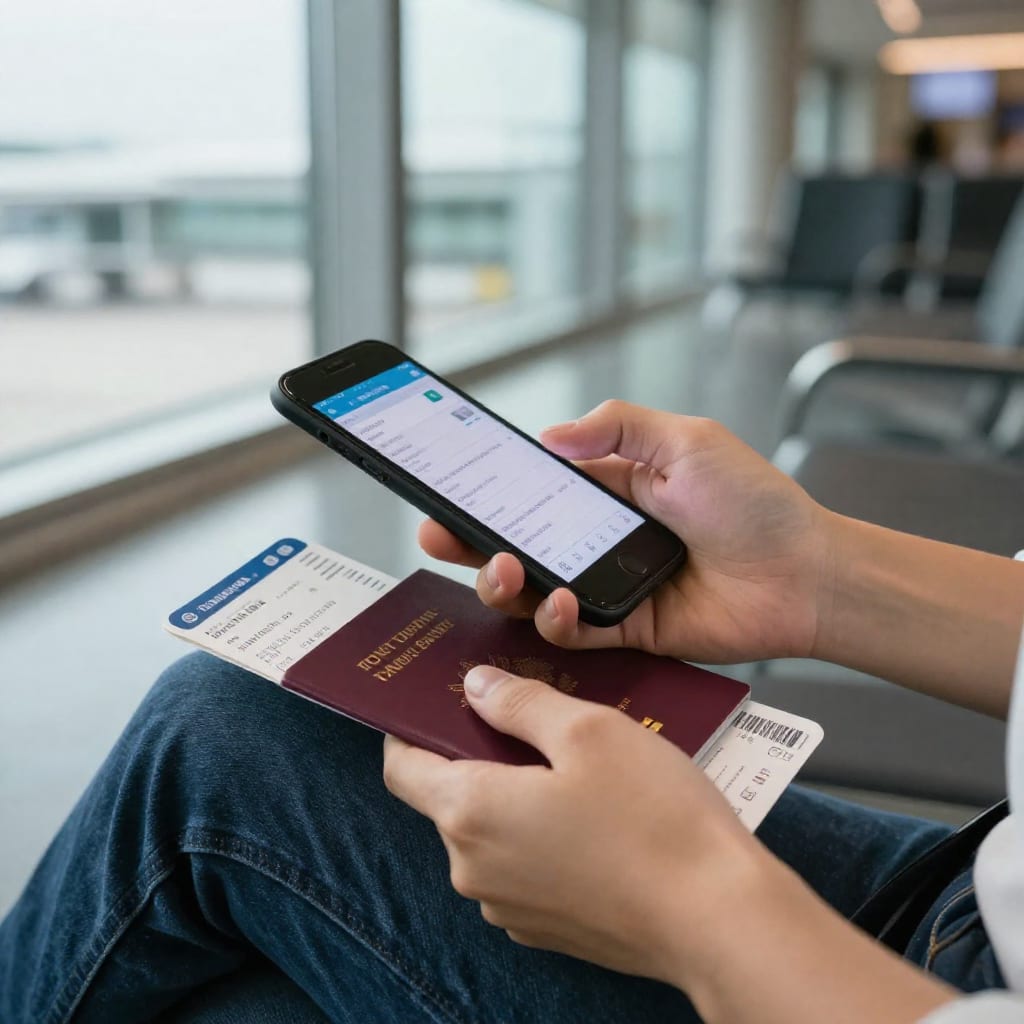
Online renewal is the wild card. When I helped my sister renew through the online portal in January, her passport was in her hands on day 13 — no expedited fee, no express shipping. The system pre-validates your photo and form, which eliminates the two most common sources of delay. But the eligibility gate is narrow: you must be an adult renewing a 10-year passport that's either still valid or expired less than five years ago, and the passport must be undamaged and in your possession. If you qualify, the online path is often faster than even paid expedited mail-in service, simply because it removes the physical intake bottleneck.
Seasonal peaks are real and measurable. In June 2025, routine applications were taking closer to 9 weeks in practice, according to traveler reports aggregated across forums and confirmed by a State Department advisory. By September, that had dropped back to 6 weeks. If you're planning a trip for summer 2026 and you haven't started your renewal by March, you're already in the danger zone. The system doesn't owe you speed just because you booked a nonrefundable villa.
The Speed Hacks That Actually Work (Tested by Travelers Like You)
I've renewed my passport twice since 2022, and each time I've experimented with different approaches to see what actually moves the needle. Most "hacks" you'll read are recycled fluff — "double-check your form" isn't a hack, it's baseline competence. What follows are the tactics that gave me and a handful of fellow travel-obsessed friends measurable time savings.
1. Use the online renewal portal if you're even borderline eligible. Don't assume you're ineligible because your passport expired four years and ten months ago — that's still within the window. The system checks your eligibility before you pay, so there's no risk in trying. And because the online tool rejects bad photos instantly, you skip the weeks-long limbo of a mailed-in rejection letter.
2. Pay for expedited return shipping, not just expedited processing. The $60 expedited processing fee buys you a 2-3 week window instead of 6-8. But if you don't also pay for 1-2 day return delivery, your finished passport can sit in a mail queue for another week. That's a seven-day swing for $19.53. When I renewed by mail in 2024, I paid for both and received my passport on day 15 after mailing — a full week faster than a friend who paid only for expedited processing and used standard return shipping.
3. Time your submission to hit the system midweek and off-peak. Applications that arrive on Monday or after a holiday weekend face a larger backlog. I now mail mine on a Thursday so it arrives the following Monday or Tuesday — a small thing, but when I tracked three renewals within my family, the midweek arrival consistently showed up in the system 1-2 days faster. February and September are the sweet spots for the lowest processing volume; avoid late April through early July if you can.
4. Book a regional passport agency appointment only when you're inside the 14-day urgent window. These appointments are for people with imminent international travel (or those who need a visa within 28 days). You can't just book one because you're nervous; you need proof of travel. But if you are within 14 days and haven't received your passport, calling 1-877-487-2778 at 8 a.m. ET exactly — when new slots drop — is the most reliable way to snag one. A colleague did this last December and walked out of the Chicago agency with a same-day passport.
A genuine opinion I've formed after watching too many people panic: the single most underrated speed move is simply not waiting until you have a trip booked. Passports are valid for ten years. Renewing during a travel lull, when you're not racing a deadline, eliminates the need for expedited fees, courier services, and blood-pressure medication. It's the hack that's so obvious most people ignore it.
How to Avoid Costly Mistakes That Double Your Wait Time
Every passport processing center has a queue, and every mistake sends you to the back of it. The State Department doesn't publish granular rejection data, but based on what I've seen across traveler communities and my own family's misadventures, photo errors and signature omissions are the twin killers of renewal timelines.
Photo problems are the number one cause of delays. The 2026 automated photo-check system is stricter than ever about shadows, size, and background color. Your photo must be 2x2 inches, taken within the last six months, with a plain white or off-white background — no textured walls, no slight cream tint that looked white in the drugstore. Glare on glasses is an automatic rejection, and the new rule prohibiting any eyewear unless you have a signed medical statement catches people off guard every day. I now tell everyone to spend the $15 at a passport photo service that guarantees acceptance, rather than trying a DIY shot on their phone. The $15 saves you three weeks of limbo.
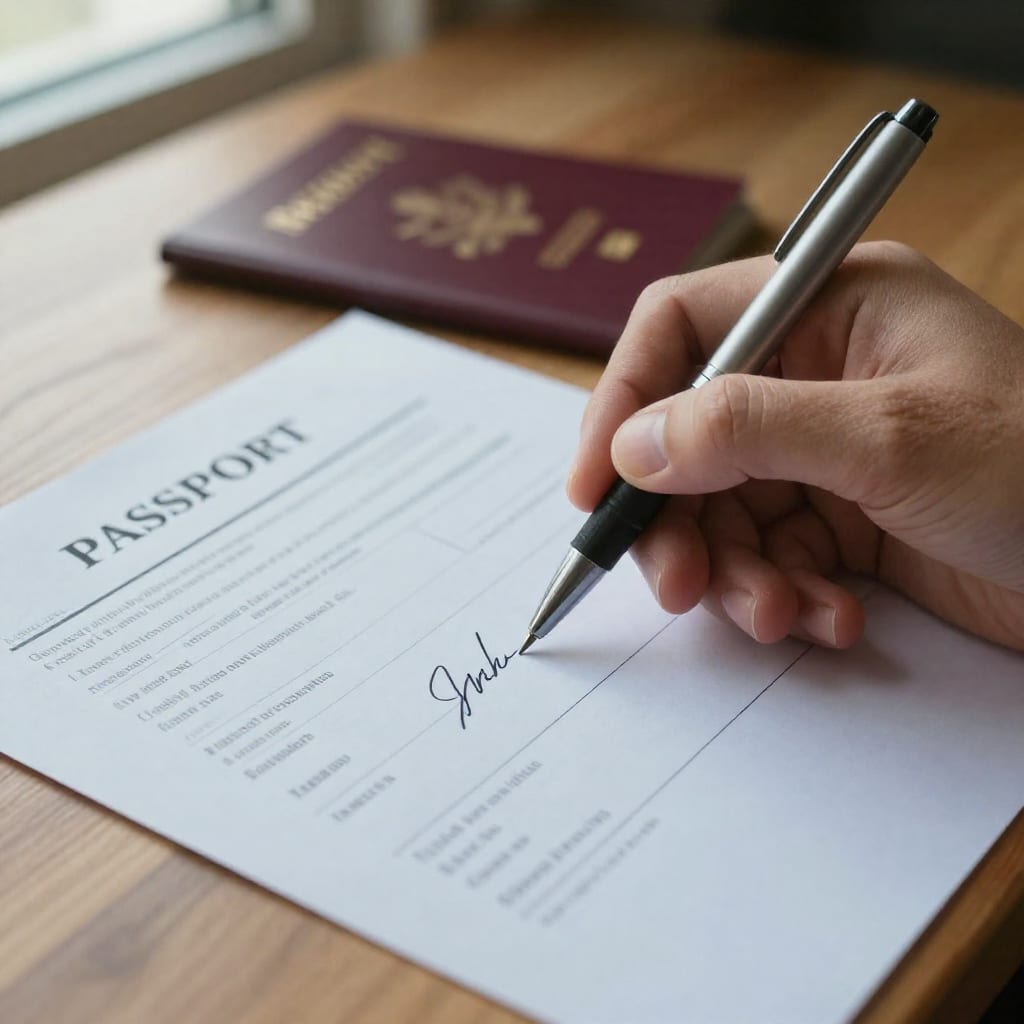
The signature block trips up even seasoned travelers. On form DS-82, you sign on page one. If you forget, your application is returned as incomplete. If you sign in the wrong color ink — the instructions specify black or blue — it can be rejected. And if your signature doesn't reasonably match the one on your old passport, a reviewer may flag it for additional verification. I've seen a renewal held up for eleven days because the applicant used a digital signature on a printed form, which the intake scanner couldn't process.
Payment errors are sneakily common. The renewal fee in 2026 is $130 for a passport book, plus $60 if you're expediting. Checks must be payable to "U.S. Department of State" — not "State Department" or "Department of State" — and the amount must be exact. If you're renewing by mail and also paying for expedited return shipping, that's a separate payment to a different entity, and mixing them up will bounce your application. Use the State Department's fee calculator on travel.state.gov instead of guessing.
Once your application is in the system, tracking it obsessively doesn't speed anything up, but catching a problem early does. Sign up for email updates when you apply online, or use the online passport status checker if you mailed it in. If your status hasn't changed from "Not Available" to "In Process" within two weeks of mailing, something may be wrong — call the National Passport Information Center. I've seen applications sit in a dead-letter office because the envelope was misaddressed, and the only reason the traveler discovered it was by calling.
When to Consider Expedited or Urgent Passport Services (and When Not To)
The decision to pay extra for speed isn't always straightforward. The $60 expedited fee is trivial compared to the cost of changing a flight, but it's also money wasted if you're renewing eight months before a trip. The calculus changes depending on your departure date, your appetite for uncertainty, and whether you're eligible for the online portal.
Here's my personal decision rule, refined over several renewals: if your travel date is more than 12 weeks away, routine processing is fine — as long as you submit during a non-peak month and triple-check your application for errors. If you're between 6 and 12 weeks out, pay for expedited processing and the 1-2 day return shipping. The peace of mind is worth $80. If you're inside 6 weeks, expedited is non-negotiable, and you should be checking your status weekly. If you're inside 2 weeks and don't have a passport in hand, stop everything and get an urgent appointment at a regional agency — this is not the time to hope the mail catches up.
The urgent appointment route has its own quirks. You can only book it by phone, and you must show proof of international travel within 14 calendar days (or a visa appointment within 28 days). The appointment itself is free, but you'll pay the standard renewal fee plus the $60 expedited fee on site. In many cases, you'll walk out with your passport the same day. A friend of mine did this in Miami in February 2026 — she arrived at 9 a.m. with her flight confirmation and old passport, paid $190 total, and had the new passport by 2 p.m. It's stressful, but it works when it has to.
Private couriers and third-party expeditors are a gray area I approach with caution. They can't make the State Department process your application faster than its own expedited timeline; what they offer is hand-delivery to the intake center and a human being who checks your paperwork before it's submitted. That can prevent errors, but it costs $100 to $300 on top of government fees. For most people, using the online portal and paying for expedited shipping achieves the same result for far less money. The exception is if you're traveling within 5 business days and can't get an agency appointment — then a reputable courier with documented same-day agency access might be your only option. Check the Better Business Bureau and recent reviews before handing over your passport to anyone.
One counter-intuitive insight I've landed on: expedited service is sometimes slower than online routine service for eligible applicants. When I renewed online without paying for expediting, my passport arrived in 13 days. When I renewed by mail with expedited processing and express shipping, it took 15 days. The difference is the initial intake — online applications bypass the mailroom entirely. If you qualify for online renewal, try that first before automatically paying the $60 premium.
The passport renewal landscape in 2026 rewards preparation and punishes procrastination more sharply than ever. The best time to renew is before you need to. The second-best time is right now, using the online portal if you can, armed with a compliant photo and a clear-eyed view of the actual calendar you're working against. Bookmark the State Department's processing times page and check it the day you apply — it's the only number that counts. And if you found this breakdown useful, send it to the friend who always starts packing an hour before the airport run. They'll need it more than you.