Toddler Bored? 15 Best Screen-Free Activities That Saved My Sanity
It was 4:15 p.m. on a Wednesday, and my 2½-year-old was lying face-down on the kitchen tile, alternating between listless moans and shredding a napkin into confetti. I had already cycled through the wooden blocks, the board books, and the musical snail that now triggered a primal rage. My phone was on the counter, glowing with the promise of 20 minutes of quiet, and I was this close. That was the moment I realized my toddler's boredom wasn't a failure on my part — it was a signal that our go-to tricks had grown stale. What followed was a messy, imperfect experiment in building a list of the best screen-free activities for toddlers that I could pull out when my own sanity was hanging by a thread. These 15 activities didn't just engage my child; they gave me back enough breathing room to drink a full cup of coffee while it was still hot. I'm sharing the exact rotation that worked, including the flops I tweaked and the storage system that kept me from drowning in pom-poms.
Why My Toddler’s Boredom (and My Sanity) Needed a Screen-Free Reset
Before I assembled this list, I had a romanticized idea of toddler play. I pictured quiet hours of concentrated block-stacking while I calmly folded laundry nearby. The reality was a rapid-fire cycle: demand a show, reject a show, fling a cracker, demand the same show again. When I mentioned this to our pediatrician at a well-child visit, she offhandedly remarked that boredom is actually a precursor to creative thinking — but only if you give them a bridge to cross it. That reframe stuck with me. My child wasn't broken; my activity toolkit was just too shallow.
The American Academy of Pediatrics recommends no screen time for children under 18 months and very limited, high-quality programming for toddlers 18-24 months, co-viewed with a caregiver. For my two-year-old, even "educational" apps seemed to shorten her fuse later in the day. I noticed a direct correlation: 30 minutes of a cartoon in the morning meant a full-throttle meltdown over the wrong color cup at lunch. The screen wasn't buying me peace; it was borrowing it at a high interest rate. Shifting to screen-free activities for toddlers wasn't a moral stance — it was a pragmatic decision to stop paying that debt.
The challenge was that most "easy toddler activity" lists I found online required a Michael's run and 45 minutes of prep I didn't have. I needed things I could set up in under three minutes using stuff already in my house, or at least items I could buy once and reuse indefinitely. The 15 activities below are the survivors — the ones that held my daughter's attention across multiple sessions, adapted to her mood, and didn't leave me with a glitter-infested rug. They aren't Pinterest-perfect. One of them literally involves a colander. But they worked, and that was the only metric that mattered.
The First 5 Activities That Worked When Nothing Else Did
These five were my emergency backup when the day was spiraling. They required almost no setup and had a high success rate for snapping my toddler out of a boredom loop. I'm listing them first because if you try nothing else, these are the ones I'd bet on.
- Sticky Wall Post-It Pull. I taped a sheet of contact paper, sticky side out, to the sliding glass door at toddler height. I gave my daughter a stack of colorful Post-it notes and showed her how to stick and unstick them. The satisfying crinkle and the slight resistance of the adhesive kept her busy for a full 18 minutes the first time. I later added lightweight plastic bottle caps and small squares of felt. The fine-motor workout was a bonus; the real gift was that she couldn't physically ask me to "do it for her" because the wall was entirely at her level.
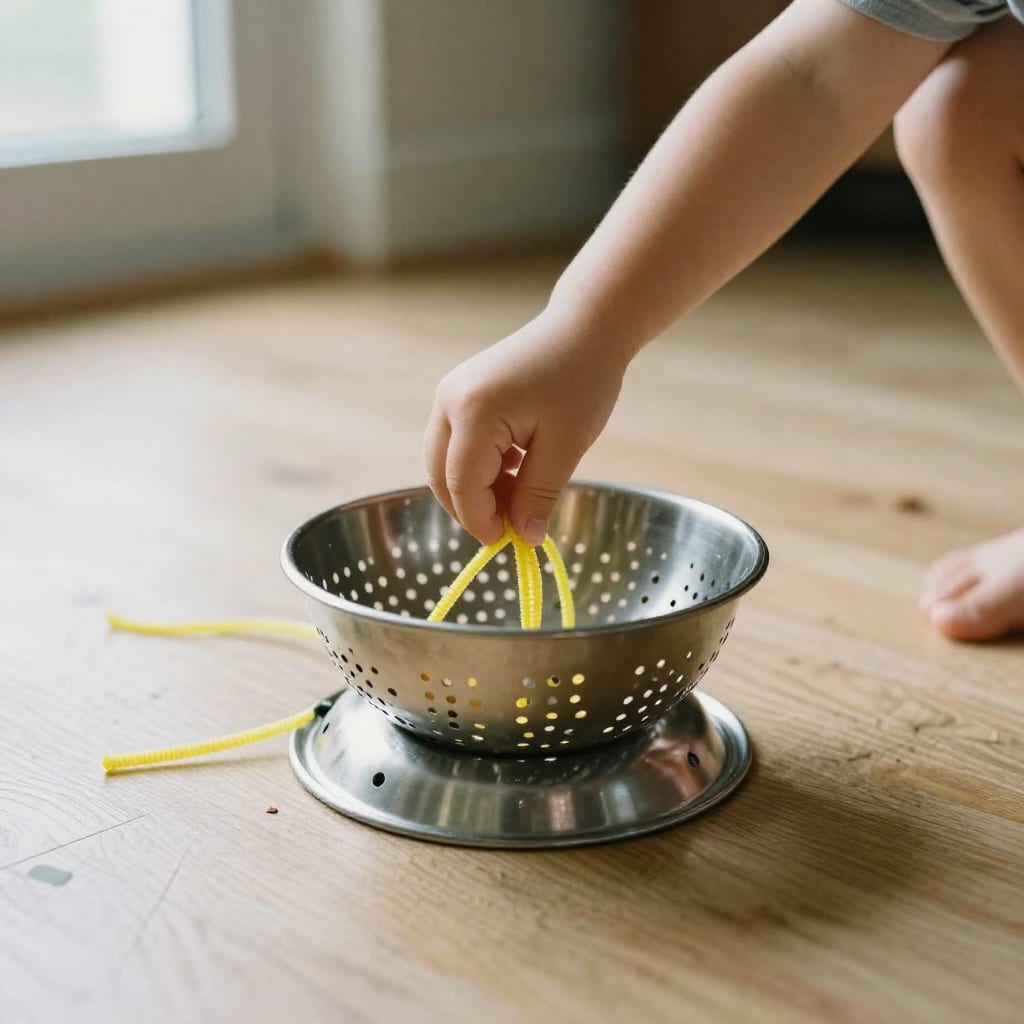
- The Colander and Pipe Cleaner Forest. I flipped a metal colander upside down and handed her a bundle of pipe cleaners. Poking them into the holes and bending the ends required a level of focus that genuinely surprised me. She invented her own game of making "trees" and then pulling them all out to start over. Total cost: $2 for pipe cleaners. Total prep: 10 seconds. This became my go-to during dinner prep because she could do it on the kitchen floor while I cooked.
- "Washing" the Plastic Animals. I filled a shallow baking dish with an inch of water, added a drop of baby soap, and tossed in every plastic dinosaur and farm animal we owned. I gave her a sponge and a small towel. The sensory experience of the warm water, the bubbles, and the "scrubbing" motion kept her engaged for 25 minutes. Yes, there was spillage. I put an old bath towel under the dish and accepted the minor cleanup as the price of a quiet episode of my podcast.
- Pillow Obstacle Course. On a day when she was literally ricocheting off furniture, I pulled every cushion off the couch and the throw pillows from the beds and made a path through the living room: crawl over the big square ones, step around the small ones, finish with a flop onto a beanbag. The physical exertion was exactly what she needed. I narrated it like a sportscaster, which made her giggle and repeat the course four times. This is my top suggestion for toddler boredom solutions when the energy is manic rather than whiny.
- Lid-and-Container Match. I collected five empty food containers with lids of different sizes — a yogurt tub, a spice jar, a small Tupperware. I took the lids off, mixed them up, and asked her to "find the hat" for each one. It was a puzzle that didn't look like a puzzle. The moment she twisted a lid on correctly, her face lit up with genuine pride. I cycled the containers every few days to keep the "puzzle" fresh.
What I learned from these first five was counter-intuitive: the less a toy does, the more a toddler does with it. A battery-operated singing turtle held her attention for maybe four minutes. A colander and some fuzzy sticks held it for 15. The best screen-free activities for toddlers leave room for the child to impose their own imagination rather than passively receiving a pre-packaged narrative.
5 More Screen-Free Favorites That Built Independence and Creativity
Once I had a reliable set of quick-rescue activities, I started experimenting with ones that could stretch into longer periods of independent play. My goal wasn't to abandon my child; it was to be nearby but not needed — finishing an email while she played three feet away without constant check-ins. These five were the bridge to that kind of parallel productivity.
- Magnets on a Cookie Sheet. I bought a set of large, chunky animal magnets (too big to swallow) and handed her a metal cookie sheet propped against the couch. She spent 20 minutes arranging a "zoo," moving the giraffe from top to bottom, narrating a little story to herself. The vertical surface was more engaging than the fridge because it sat in her lap. When I saw her start to lose interest, I slid in a new element — a few magnetic letters — without saying a word, and she re-engaged immediately.
- Fabric Scrap Pull Box. I cut up old t-shirts and fabric remnants into strips of varying textures — silky, rough knit, fleece — and stuffed them into an empty tissue box. Pulling them out, sorting them by color, and stuffing them back in became a self-contained cycle. This was one of the strongest independent play activities I found because the "reset" was built in: once the box was empty, the natural next step was to refill it.
- "Painting" with Water on Construction Paper. I taped a sheet of dark construction paper to her high-chair tray, handed her a paintbrush and a small cup of water, and let her "paint." The water darkened the paper, creating visible strokes that faded as they dried, so the canvas was infinitely reusable. No mess, no toxic materials, and she felt like a real artist. I kept this in my back pocket for times when I needed to make a phone call.
- DIY Sound Shakers. We filled three small, screw-top plastic bottles with different dry goods: rice, dried beans, and popcorn kernels. I hot-glued the lids shut (critical safety step). She shook them, compared the sounds, and eventually incorporated them into a spontaneous dance party. This was a reminder that creative toddler play ideas don't need to be visually intricate — auditory novelty is just as powerful.
- Laundry Basket "Boat." I pulled a clean, empty laundry basket into the middle of the living room, tossed in a few board books and a stuffed animal, and told her it was her boat. She climbed in, "read" to her bear, and occasionally announced she was "sailing." The enclosed space gave her a sense of her own defined territory, which reduced the impulse to wander and whine. I dragged the basket to different "ports" — the kitchen, my bedroom — and she treated each relocation as a new adventure.
A genuine judgment call here: I initially resisted activities like the fabric box because they looked like "busy work" to me, not real play. I was wrong. My daughter was practicing schema-building — the toddler-age urge to enclose, transport, and connect objects. Recognizing that reframed my own impatience. The activity wasn't pointless repetition; it was a developmental loop she needed to close. That perspective shift made me far less likely to interrupt her and inadvertently tank her focus.
The Last 5 That Turned Chaos into Calm (Even on Rainy Days)
The final five activities were my heavy artillery — reserved for the days when we were trapped indoors by weather, illness, or my own depleted energy. They lean into sensory input and large-motor movement, which I've found are the fastest routes to resetting a dysregulated toddler nervous system.
- Blanket Fort with Flashlight "Stars." Draping a fitted sheet over the dining table took 60 seconds. I crawled in with her, handed her a small flashlight, and let her shine it on the "ceiling." The enclosed, darkened space was instantly calming. We brought in a pillow and a single book. The novelty of the environment — not a new toy, but a transformed familiar space — was the magic. This is my top recommendation for screen-free activities for toddlers at home when you're all going stir-crazy.
- Freeze Dance with a Twist. I played short bursts of music from my phone (sound only, screen facing away) and called out an animal when the music stopped: "FREEZE like a frog!" She'd squat and ribbit until the music started again. The combination of high-energy movement and controlled stopping gave her practice in impulse regulation without feeling like a lesson. I joined in, which made her shriek with laughter and doubled the exhaustion factor — the good kind.
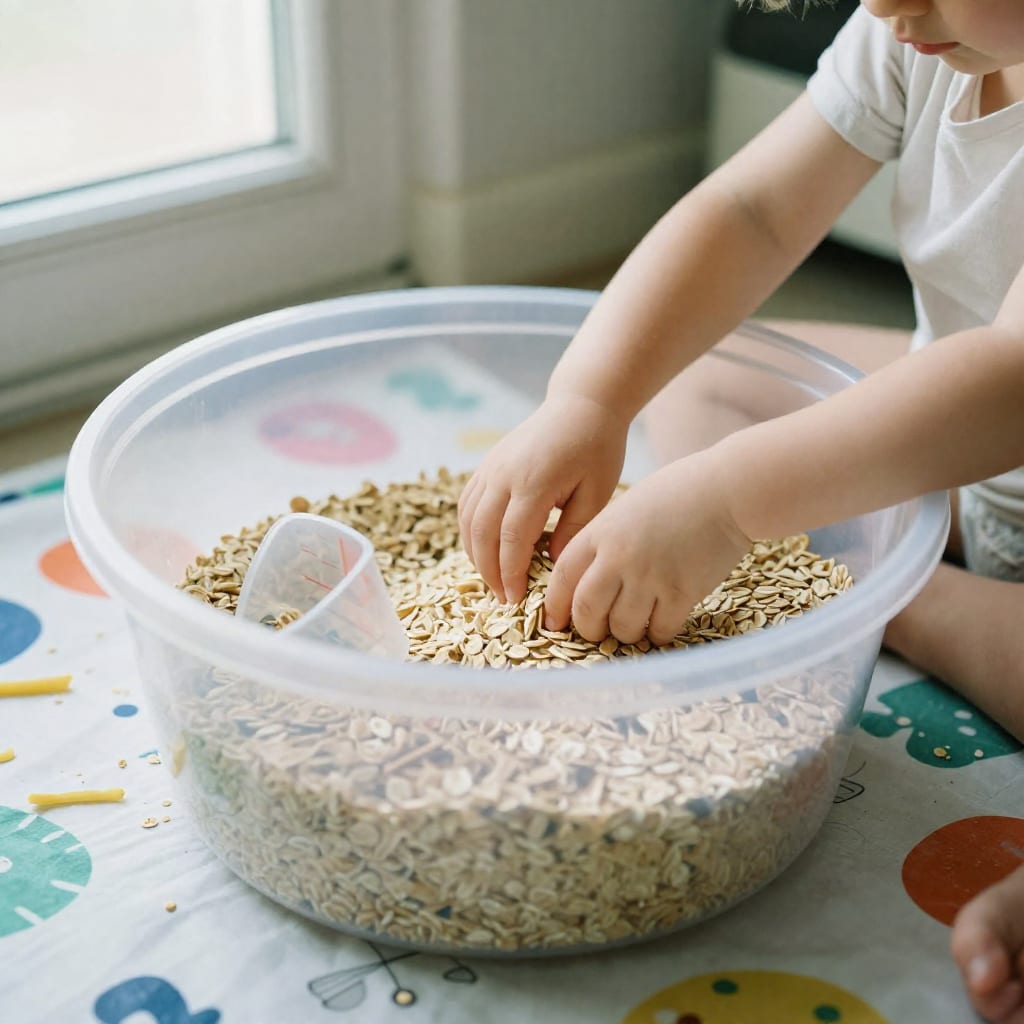
- Oatmeal Sensory Bin. On a truly desperate rainy Tuesday, I poured a container of plain dry oats into a large plastic tub, added a few scoops, funnels, and small plastic cups, and set it on the kitchen floor. She scooped, poured, and buried her dinosaurs for 35 minutes. The cleanup was real — oats migrated under the fridge — but the sustained, quiet focus was worth every sweep. I later learned to put a cheap shower curtain liner underneath, which caught 90% of the fallout.
- Pillow Pile "Heavy Work." I piled every pillow and cushion in the house into a mountain on the living room rug and challenged her to "move the whole mountain" to the other side of the room. The pushing, lifting, and dragging provided proprioceptive input — essentially deep pressure to the joints — which can be incredibly organizing for a sensory-seeking toddler. After 15 minutes of "heavy work," she was noticeably calmer and more regulated. This is a core sensory play for toddlers strategy I still use on high-energy days.
- Window Cling Storytelling. I bought a $6 set of reusable vinyl window clings — shapes, animals, seasonal themes — and stuck them to the lower half of our patio door. I started a story: "The duck is looking for his hat." She moved the duck around the glass, adding characters and inventing a plot that made no logical sense but held her attention for ages. Because the clings are repositionable, the story could evolve over a whole afternoon, with me dropping in occasionally to add a plot twist and then stepping away.
A concrete mini case study: the first time I tried the oatmeal bin, I made the mistake of presenting it right before nap time when she was already overtired. She flung oats everywhere in 90 seconds and screamed when I tried to redirect. The second attempt, I set it up 45 minutes after she'd woken from a good nap, with a calm, focused mood. The result was the longest independent play stretch I'd ever witnessed — 35 minutes of quiet pouring and scooping. The takeaway: timing matters as much as the activity itself. Offer a high-sensory or high-energy activity when your child is already regulated, not when they're already on the brink.
How I Rotated These Activities Without Losing My Mind
Once I had more than a dozen reliable screen-free play ideas, I hit a new problem: decision fatigue. In the moment of crisis — toddler melting down, dinner burning — I couldn't remember what had worked last time or whether we'd already done the Post-it wall three days in a row. I needed a system so simple I'd actually use it.
I landed on a "box rotation" method that took 20 minutes to set up and zero daily brainpower. I bought three medium plastic bins and labeled them "Monday/Tuesday," "Wednesday/Thursday," and "Friday/Weekend." Into each bin, I put the components for 4-5 activities — not the whole activity, just the unique bits: the pipe cleaners and colander, the fabric strips and tissue box, the plastic animals and sponge. The shared staples (contact paper, baking dish, construction paper) lived in a dedicated "Parent Grab" drawer. Every few days, I swapped the bin out. The toddler saw "new" activities even though I was just rotating the same core set.
I also built a "toddler-accessible" low shelf where two choices were always visible. Before a screen-free play block, I'd say, "Do you want the blocks or the magnets?" The limited choice gave her a sense of control, which dramatically reduced refusal. I involved her in cleanup by making it a race: "Can you get all the pom-poms back in the bag before I finish loading the dishwasher?" It didn't always work, but when it did, it saved me 10 minutes of post-bedtime tidying.
One trade-off I'll be honest about: a rotation system only works if you actually do the upfront sorting. I had a bin of random toy parts that sat untouched for a month because I didn't assign it a "day." The structure was the unlock — not the stuff itself. If you're feeling overwhelmed, start with just two bins and a 3-day swap. Perfection is not the point. Marginal improvement in your daily sanity is.
These 15 activities didn't turn my toddler into a Zen master. She still had meltdowns. She still asked for cartoons. But the gap between "I'm bored" and "I'm melting down" widened considerably, and that gap was where I found my own breathing room. If you take nothing else from this, try the colander and pipe cleaners once. It might just buy you a hot cup of coffee — and that, for me, was the real victory.
Bookmark this list before the next rainy Tuesday. It's the kind of reference you'll want when your brain is too fried to invent something on the spot.