15 Best Board Games for Family Game Night (By Age 2026)
I still remember the night we tried to play a “family-friendly” game with my then four-year-old and ten-year-old. The younger one knocked the pieces off the board five times, while the older one sulked because the game felt too babyish. That night, I realized that the so-called best board games for family game night by age aren't just a marketing gimmick — they're the difference between a night of frustrated sighs and one where everyone is actually laughing together. In this guide, I’ll share 15 handpicked games, broken down by age group, based on what actually worked with my own kids and the families I’ve coached through game nights.
I’ve organized these picks by developmental stage, from preschoolers who can barely wait their turn to teens who can handle a two-hour negotiation marathon. Each game includes a quick “why it works” note, plus a few honest trade-offs I’ve discovered the hard way. Let’s dive in.
Why Age-Specific Board Games Matter for Family Game Night
I’ve learned the hard way that one-size-fits-all board games are a recipe for disaster. A game that’s too simple bores older kids; one that’s too complex frustrates younger ones. That’s why matching the game to the age range — not just the box label — is the single most important factor for a successful family game night. When you choose the best board games for family game night by age, you’re actually aligning the rules with each player’s cognitive abilities, attention span, and motor skills. A three-year-old needs a game that lasts about 10 minutes, uses big pieces, and has very few rules. A ten-year-old can handle resource management and a 45-minute commitment. Getting this right means less boredom, fewer meltdowns, and more moments where everyone is genuinely engaged.
Another hidden benefit: age-appropriate games build confidence. When a child wins because they understood the rules and made good choices — not just because they got lucky — they feel a real sense of accomplishment. That feeling is what keeps them coming back to the table week after week. So before you buy the next flashy box, take a moment to think about where each family member actually is developmentally, not just where the box says they should be.
Top Board Games for Ages 3–5: First Games That Build Skills
When my youngest turned three, I made the mistake of buying a game that required reading. We didn’t get past the setup. For the preschool set, you want games that focus on cooperation, color recognition, counting, and very short playtimes — ideally 10 to 15 minutes max. Here are my top picks that have survived many a toddler meltdown.
1. My First Orchard (HABA)
A cooperative classic. Players work together to pick fruit from a tree before the raven steals it. No reading required, and the pieces are chunky and easy for small hands. My three-year-old could play it after one explanation. Why it works: It teaches turn-taking and counting without the pressure of “winning” — everyone either wins or loses together. The downside: after about 20 plays, it can feel repetitive for adults, but for the 3-5 set, that repetition is actually comforting.
2. The Sneaky Snacky Squirrel Game
This one uses a spinner and a set of plastic acorns to practice color matching and fine motor skills. Kids love the tactile satisfaction of picking up acorns with the squirrel tweezers. Why it works: It’s quick — about 10 minutes — and the competitive element is gentle enough that no one cries when they lose. My only caution: the spinner can be a little flimsy, so handle it carefully.
3. Animal Upon Animal (HABA)
A wooden stacking game where players take turns adding animals to a wobbly pile. No reading, no numbers — just steady hands and a bit of patience. Why it works: It builds hand-eye coordination and teaches kids that sometimes the pile falls, and that’s okay. Older siblings can still enjoy it as a quick warm-up game because the stacking challenge remains fun even at age eight.
4. First Orchard (simplified version of My First Orchard)
If you want a smaller box that travels well, this is it. Same cooperative fruit-picking concept but in a compact format. Why it works: It’s a perfect entry-level game that teaches the basics of rules and turn-taking in under 15 minutes.
Pro tip for this age group: Don’t be afraid to modify the rules. If your child wants to play “help the squirrel get all the acorns” without the competitive spinner, let them. The goal is to build positive associations with game night, not to enforce strict rules.
Best Board Games for Ages 6–8: Strategy, Reading, and Laughter
Elementary-age kids are a sweet spot for family gaming. They can handle simple reading, basic strategy, and longer playtimes — think 20 to 30 minutes. But they still need clear rules and a bit of visual fun to stay engaged. Here are the games that consistently score high in my house.
5. Outfoxed!
A cooperative whodunit game where players work together to deduce which fox stole the pot pie. Kids use a special decoder to check clues. Why it works: It introduces deduction in a non-competitive way — everyone wins or loses together. The moving fox pieces and the satisfying “click” of the decoder keep young attention spans locked in. One caveat: the game can be a little long for some 6-year-olds, so feel free to play “first to three clues” instead of the full game.
6. Zingo!
A fast-paced bingo-style game with picture tiles. Players slide the Zinger to reveal tiles and call out matches. Why it works: It’s great for building vocabulary and visual recognition. The speed element keeps it exciting, and multiple versions (including sight words) let you adjust difficulty. My 7-year-old loves the competitive thrill, and even my 4-year-old can play with help.
7. Ticket to Ride: First Journey
A simplified version of the classic train route-building game. Players collect colored train cards and claim routes on a map. Why it works: It teaches basic planning and geography without overwhelming rules. The full Ticket to Ride is too complex for most 6-year-olds, but First Journey hits the sweet spot. Expect 20-30 minute games. The only downside: it can take a round or two for kids to grasp the concept of “collecting sets,” so have patience.
8. Sushi Go!
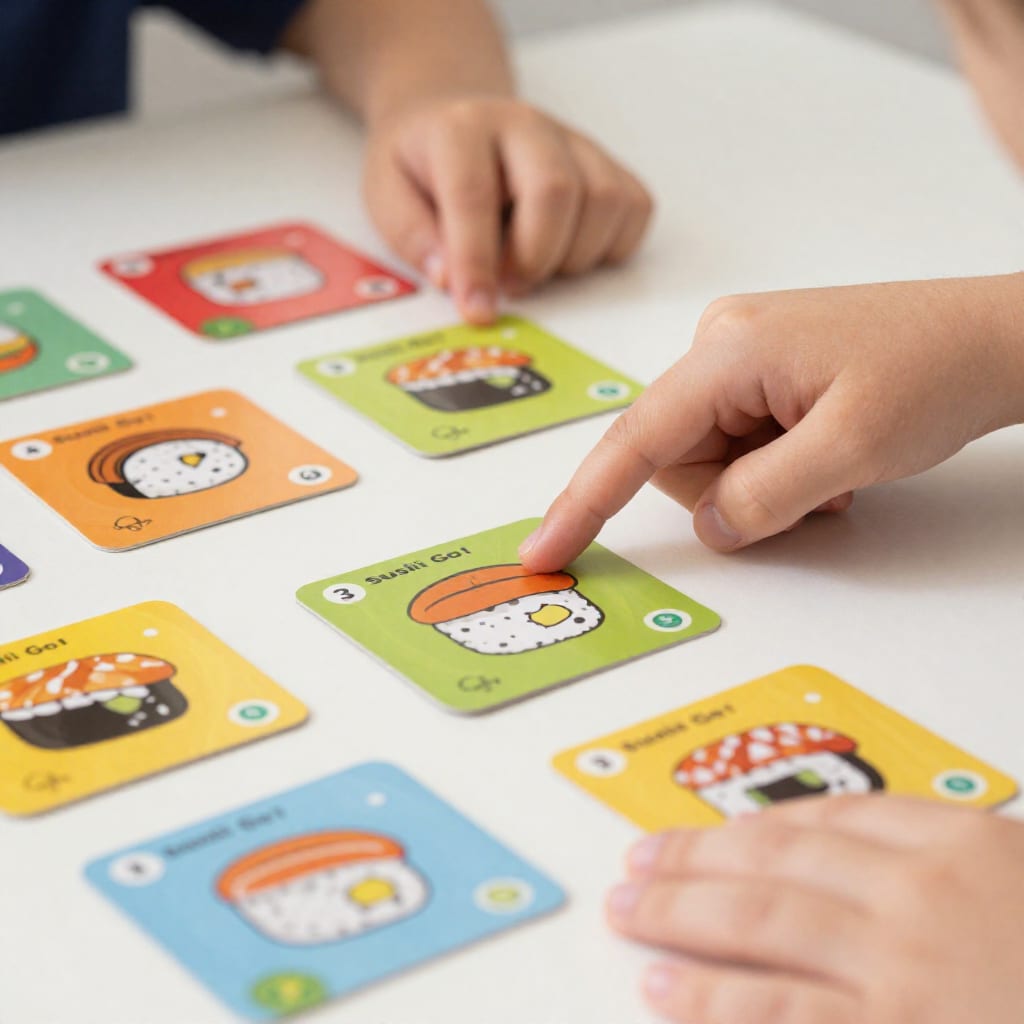
A card-drafting game where players pick sushi dishes to score points. The cards are cute, the rules are simple, and a game lasts about 15 minutes. Why it works: It introduces strategy (which card to pass, which to keep) in a very accessible way. My 8-year-old loves it because she can beat adults with smart picks. The small cards can be a choking hazard for younger siblings, so keep it away from kids under 3.
Top Picks for Ages 9–12: Deeper Strategy and Family Competition
Pre-teens are ready for resource management, light social deduction, and games that take 30–45 minutes. They want complexity but still need games that parents and younger siblings can play without a PhD in rulebooks. Here’s what I’ve found works best.
9. Catan (Junior or Base Game)
Catan Junior is a great entry point — it uses the same resource-trading mechanic but with pirate themes and simpler rules. Why it works: It teaches negotiation, planning, and resource management. Older kids can graduate to the full Catan, which adds more complexity. I’ve seen 10-year-olds plan their road networks like tiny urban planners. The only catch: games can run 45–60 minutes, so save it for weekends or when you have a solid block of time.
10. Codenames Pictures
A visual word association game where teams try to guess which picture cards correspond to a clue-giver’s hints. Why it works: It’s perfect for mixed-age groups — younger kids can contribute with their visual creativity, while older players handle the deeper logic. Games are quick (15–20 minutes) and highly replayable. The pictures are whimsical, and the clues can be as simple or complex as you want. One warning: it’s best with at least four players.
11. King of Tokyo
A dice-rolling game where players take on the role of giant monsters battling for control of Tokyo. Why it works: It’s fast (30 minutes), has a fun theme, and introduces push-your-luck mechanics. Kids love the monster art and the “take that” element of attacking each other. It scales well from ages 8 to adult. The dice can be loud, so consider a dice tray if you have light sleepers nearby.
12. Splendor
A gem-collecting engine-building game where players acquire cards that give them more gems and victory points. Why it works: It’s a pure strategy game with no luck — every move matters. It’s quiet and focused, which is a nice break from the chaos of some other games. Ages 9 and up can handle it, and adults will find it deeply satisfying. My 11-year-old regularly beats me, which I pretend is because she’s smarter (she is).
Games for Teens and Adults (Ages 13+): Complex and Replayable
Teens want games with depth, negotiation, and themes that feel mature. These are the games that can keep a family with older kids and parents equally engaged for 45–90 minutes. They also scale well for game nights with just adults.
13. Wingspan
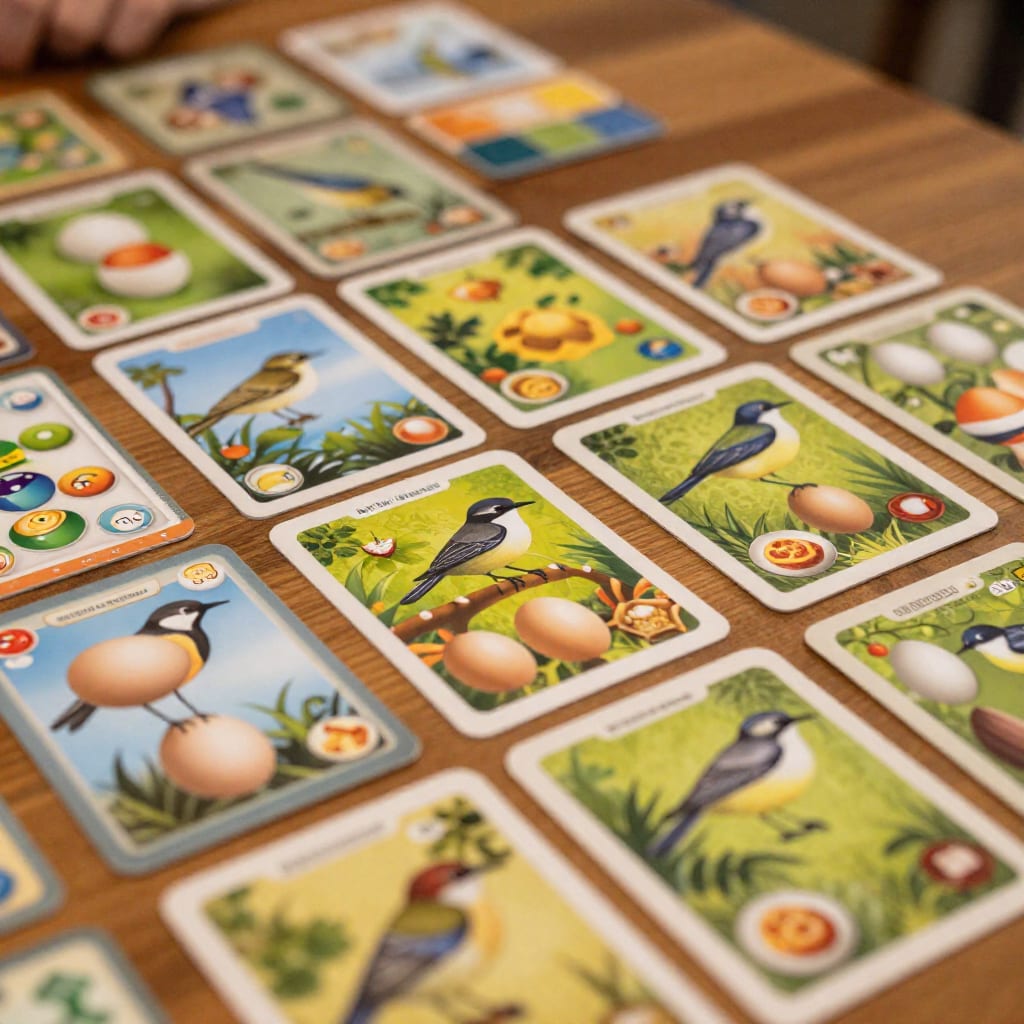
A beautiful engine-building game about bird habitats. Players collect birds, lay eggs, and gather food. Why it works: It’s peaceful, strategic, and visually stunning. Every bird card has unique art and real-world facts, which adds an educational layer. Games take about 60 minutes. It’s a bit of a learning curve for the first play, but the rulebook is excellent. Teens who love nature or strategy will adore it.
14. Coup
A quick bluffing and deduction game (15 minutes per round) where players have hidden roles and try to eliminate opponents through deception. Why it works: It’s fast, portable, and rewards social intelligence. Teens love the drama of calling someone’s bluff. It’s best with 4–6 players. The only downside: it can get heated, so set a tone of good-natured fun beforehand.
15. Terraforming Mars
A complex engine-building game where players compete to make Mars habitable. It’s a heavy game (90–120 minutes). Why it works: It offers deep strategy, resource management, and a sense of epic achievement. It’s not for every family, but if your teens love science or complex systems, this is a winner. I’d recommend it only for families where everyone is 13+ and willing to commit to a full evening.
How to Choose the Perfect Game for Your Family’s Style
After years of trial and error, I’ve developed a quick checklist that helps me pick the right game for any given night. Here’s what I consider:
- Player count: Make sure the game supports the number of people at your table. Some games are best with 4, others with 6. Check the box before you buy.
- Play time: Be honest about your family’s attention span. If you have a wiggly 6-year-old and a tired parent, a 45-minute game is a bad idea. Stick to 15–20 minutes for mixed-age groups.
- Learning curve: Read the rulebook online before buying. If it looks like a textbook, it’s probably too complex for casual family nights.
- Cooperative vs. competitive: Some families thrive on competition; others need the safety of cooperation. Know your group. Cooperative games like Outfoxed! or Pandemic (for older kids) can reduce tension.
- Replayability: A game that feels different every time is worth the investment. Games with variable setups (like Catan or Wingspan) have high replay value.
Here’s a copy-pasteable checklist you can save before your next game store visit:
- ☐ Supports our exact player count
- ☐ Playtime matches our available window
- ☐ Rules fit on one page (or are easy to teach)
- ☐ Cooperative or competitive? Both okay?
- ☐ Does it have good reviews from families similar to ours?
One counter-intuitive insight I’ve learned: sometimes the “best” game for your family isn’t the highest-rated one on BoardGameGeek. It’s the one that gets played. A simple game that everyone loves will see more table time than a complex masterpiece that sits on the shelf. So don’t be afraid to start simple and build up.
Frequently Asked Questions
What is the best board game for a family with a wide age gap (like ages 4 and 12)?
Look for games with variable difficulty or team play, such as Outfoxed! or Codenames Pictures, where younger kids can contribute with visual or simple clues while older players handle deeper strategy.
How many board games do I really need for a good family game night?
Typically 3–5 games that cover different play styles (cooperative, competitive, quick, longer) are enough to rotate. Focus on one per age bracket in your family.
Are there good board games for non-readers that older kids won't find boring?
Yes—games like Animal Upon Animal, My First Castle Panic, or The Sneaky Snacky Squirrel Game use pictures, colors, or memory, so older kids can still enjoy them as a light filler between heavier games.
What’s the average playtime for a family-friendly board game by age?
For ages 3–5, aim for 10–15 minutes; ages 6–8, 20–30 minutes; ages 9–12, 30–45 minutes; teens/adults, 45–90 minutes. Longer games often have shorter variants or 'first to X points' rules.
Can I use board games to teach life skills like math or reading?
Absolutely—games like Sum Swamp (math), Scrabble Junior (reading), and The Game of Life (money management) naturally reinforce skills through play without feeling like homework.
Practical takeaway: Start with one game per age bracket in your family. For a family with a 4-year-old and a 10-year-old, I’d grab My First Orchard for the youngest and Sushi Go! for the older one, plus a cooperative game like Outfoxed! that both can enjoy together. That’s three games that cover everyone, and you can rotate them over several game nights. The secret to a successful family game night isn’t the fanciest game — it’s the one that gets everyone to the table, laughing together. Happy gaming!